Our report shows that a screening programme is not only possible, but practical and affordable.
A targeted screening programme for high-risk men aged 45–69 would save lives, reduce inequalities and ease late-stage pressures on the NHS. The cost is modest and the workforce implications manageable. Compared with the scale of the benefits, these demands are minimal. Our findings suggest:
That a targeted screening programme for men of Black ethnicity and men with a relevant family history will:
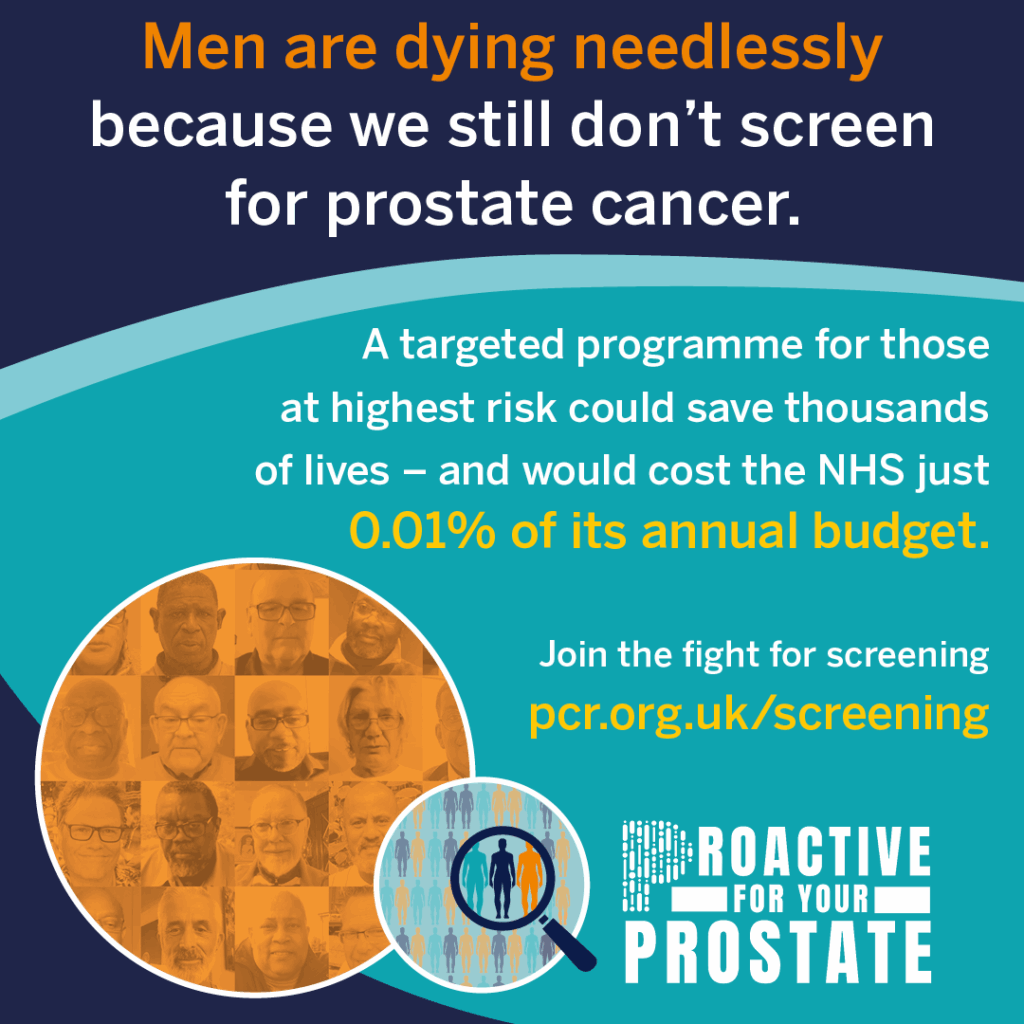
- Cost the NHS an extra ~£25 million annually (around 0.01% of the NHS budget) – at a cost of £18 per eligible individual this is in line with screening costs for other cancers such as cervical, bowel and breast cancer;
- Involve a ~23% increase in the number of PSA tests, MRIs and biopsies delivered;
- Require an uplift in full-time equivalent positions in the NHS workforce from 0.01%–0.4% depending on the discipline;
- Reduce entrenched inequalities for Black men, those with a family history of prostate cancer and those in areas with high levels of deprivation.
Evaluating and adopting innovations such as reflex blood tests, AI-enabled MRI, polygenic risk scores, digital pathology and other emerging technologies will reduce pressures on services and help pave the way for future whole population screening.